Paying for a subscription should be the least interesting part of buying it, and when it is not, something is wrong. A fair payment is a card, in US dollars, through a known processor, with a receipt and a refund policy in writing. An unfair payment is a gift card, a wire transfer to a stranger, or a request for a password. This guide explains how payment works here, what Stripe does with your card, which methods are safe and which are not, and what happens with refunds and renewals — so that the moment you pay is boring, and stays boring.
The standard path is simple. Pick a plan on the plans page: Premium monthly at $19.99, Premium yearly at $99.99, Basic monthly at $14.99, Basic yearly at $59.99, or a multi-device year. Message support on WhatsApp with the plan you want, and the team confirms the price and sends a payment link. The link opens Stripe, the payment processor, where you enter the card details and pay in US dollars. The charge appears on the bank statement with the name the provider uses for card payments, and the team activates the subscription within minutes of the payment clearing. The login arrives on WhatsApp, and the playlist loads by itself.
Paying by card through Stripe
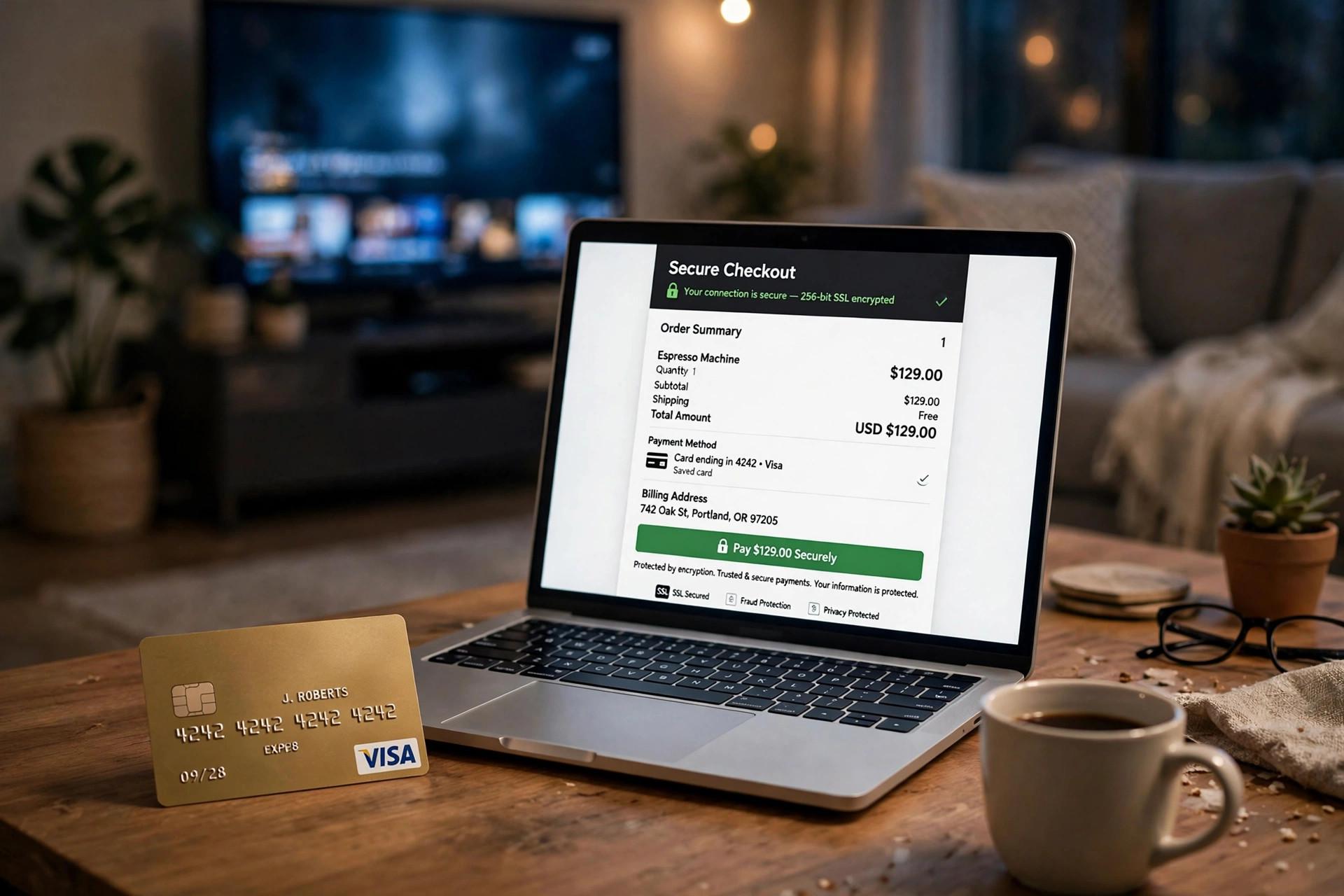
Stripe is the company that moves the money, and it is the reason a card payment here is safe. When you pay, the card details go to Stripe, not to the provider, and not to a chat message. Stripe checks the card with the bank, takes the payment, and tells the provider that the money has arrived. The provider never sees the full card number, never stores it, and never asks for it. That separation is the whole point of using a processor: the seller gets paid, the buyer keeps the card details private, and the bank stands behind the charge if anything goes wrong. If a payment fails, Stripe tells you why — an expired card, a wrong number, a bank that blocked the charge — and you can try again with a corrected detail.
Card payments in US dollars carry two protections that other methods do not. First, the bank can reverse a charge if the service was never delivered, through a chargeback, and the card networks take that seriously. Second, the payment leaves a record: a date, an amount, a name, and a receipt that can be shown to anyone. Keep the receipt. It is the proof of what was paid, when it was paid, and for which plan, and it is the document that settles any argument about a renewal or a refund. A provider that sends a proper receipt for every payment is a provider that expects to be held to account, and that is a good sign. The refund policy page explains how refunds return to the same card, in 5 to 10 business days.
Which cards work, and what if a card is declined
Visa, Mastercard and American Express work, along with most debit cards that carry a Visa or Mastercard logo. A prepaid card works too, as long as it carries enough balance for the plan and it is registered with a billing address, because Stripe checks the address against the card. A card from a US bank is the smoothest, because the charge is in US dollars and there is no currency conversion. A card from another country works as well, and the bank converts the dollars at its own rate, which usually adds a small fee — check the rate before paying a yearly plan, so the conversion does not surprise you.
A declined card is usually one of four things: the card has expired, the billing address does not match, the bank blocked the charge as unusual, or the card has reached its limit. The fix is in that order: check the expiry date, check the address, call the bank and say the charge is yours, and check the balance. Banks block first-time charges to a new seller more often than people expect, and a two-minute call clears it. If the card keeps failing, try a different card, or ask support about the other methods confirmed on WhatsApp. Never send card details in a chat message, and never read the full card number to anyone on the phone. Stripe is the only place the number should ever be typed.
Payment methods to avoid
Three payment methods should always raise a warning, and a provider that insists on any of them is a provider to walk away from. Gift cards — Apple, Google, Amazon or any store card — are the classic scam payment, because a gift card cannot be reversed once the code is sent. Wire transfers and money transfer apps that send cash to a person are the same: once the money is gone, it is gone, and the bank cannot bring it back. Cryptocurrency is not reversible either, and a provider that only takes crypto is a provider that does not want to be traced. A fair provider takes a card through a processor, because a card can be reversed, and a provider that wants your money fairly has no reason to avoid that.
- Never pay with a gift card, a wire transfer, or a money transfer to a stranger.
- Never send card details in a WhatsApp message, an email, or a chat.
- Never share a password, a one-time code, or a bank login with anyone claiming to be support.
- Always pay through the payment link sent by support, and check the amount before confirming.
The test is simple: if the payment method cannot be reversed by your bank, do not use it. A card can be reversed. A gift card cannot. That single difference is the reason cards are the standard, and the reason a provider that refuses cards is telling you something about itself. Support here confirms the payment methods on WhatsApp before you pay, and the card link goes through Stripe, so the payment is traceable, reversible and receipted. If a message ever asks you to pay a different way — a gift card, a wire, a code — stop, and ask support to confirm the method in the same chat. A real team will confirm the card link. A scammer will change the subject.
Renewals: how they work and how to stop them
A subscription renews at the end of the time you paid for: a month renews after thirty days, a year after twelve months, and the renewal uses the same card unless you change it. The renewal price is the same as the price you signed up at — Premium yearly renews at $99.99, Basic yearly at $59.99 — and you get a message before it happens, so the charge is never a surprise. If the card has expired since the last payment, the renewal fails and the service stops at the end of the paid time, and support messages you to update the card. That is a safety net, not a fault: a failed renewal is better than a charge on a card you no longer use.
Stopping a renewal is one message on WhatsApp, sent at least two days before the renewal date. The service runs until the paid time ends, then stops, and the card is not charged again. There is no fee for cancelling, and no form to fill in. The cancellation guide covers the timing in detail, including the mistake of cancelling on the renewal day itself, when a slow reply can let the charge through. If a renewal charge appears after you cancelled, message support with the date you cancelled and the confirmation they sent, and ask for the charge to be reversed. Keep the confirmation message, because it is the record that settles it.
Refunds: how the money comes back
A refund returns money already paid, and it applies when the service does not work and support cannot fix it, reported within 7 days of purchase on short plans and 30 days on yearly plans. The refund goes back to the original payment method — the same card that paid — in 5 to 10 business days. It does not go to a different card, a different account, or a gift card, because the refund must follow the payment. If the card that paid has since been replaced, tell support, and the bank will route the refund to the new card on the same account, because the refund is tied to the account, not the plastic. The refund policy explained guide sets out the 7-day and 30-day windows and what to send support.
The refund window starts on the day of purchase, not the day you first watch, so the clock is running from the payment. That is the fair way to read it: a year plan bought on the 14th of March carries its 30-day window until the 13th of April, and a fault reported on the 20th of April is outside the window, however real the fault is. Test early, test hard, and report faults the week they happen, not the month after. The full terms are on the refund policy page, and they are short enough to read before you pay. A provider that puts the refund rules in writing before the payment is a provider that expects to honour them.
Receipts, records and keeping proof
Every payment should leave three records, and you should keep all three. The receipt from Stripe, showing the date, the amount and the plan. The confirmation message on WhatsApp, showing the plan, the price and the date the service ends. And the bank statement line, showing the charge. Together they prove what was bought, when it was bought, and when it ends, and they settle any argument about a renewal, a refund or a missing login. Screenshot the WhatsApp confirmation and keep it in the chat, because the chat is the record both sides can see.
If a payment is ever taken twice, or a renewal charge appears after a cancellation, the records are the fix. Send support the receipt, the confirmation and the statement line, and ask for the duplicate to be reversed. A real team reverses a duplicate charge without an argument, because the records show it plainly. A team that argues with a receipt is a team to leave, and the bank can reverse the charge if the team will not. The cost guide lists every price, so the amount on any receipt can be checked against the published price in seconds, and a charge that does not match a published price is a charge to question.